


[Communiqué] L'équipe du Dr Chetan Chitnis de l’Institut Pasteur, partenaire du LabEx ParaFrap, a étudié le stade sanguin du parasite Plasmodium falciparum, à l’origine de la forme la...
The Bioscope Group is organizing the Bioscope Summer Courses in Proteomics in June 2016, in Caparica (Lisbon, Portugal), as follows: June 15th-17th 2016Hands-on course in ultrafast sample...
[Publication] Les derniers travaux de Rania Najm, Hiba El Hajj, Maryse Lebrun & leurs collègues sont publiés dans PNAS. Les auteurs apportent des connaissances importantes sur les acteurs...
The SFP (French Society of Parasitology) - SFMM (the French Society of Medical Mycology) annual meeting 2016 will take place in Grenoble from 23 to 25 March 2016. Information and registration on...
Le LabEx ParaFrap vous souhaite plein de bonheur, de santé, de science et de succès pour 2023. Première actualité du réseau cette année : les webinaires ParaFrap reprennent en 2023, comme les...
The Bioscope Group is organizing the Bioscope Winter Courses in Proteomics in January-February 2016, in Caparica (Lisbon, Portugal), as follows: January 25th-27th 2016 V Hands-on course in...
[Communiqué] Gerald Spaeth, chef de l'unité "Parasitologie moléculaire et signalisation" à L'institut pasteur Paris, a obtenu une subvention Synergy du Conseil européen de la...
The Nobel Prize in Medicine 2015 was awarded to researchers in epidemiology : William Campbell (Ireland), Satoshi Omura (Japan) and Youyou Tu (China). They were rewarded for their work against...
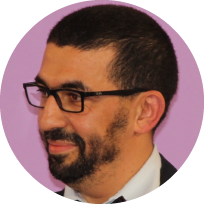 |
Mohamed-Ali HAKIMI |
|
|
Information |
||
 |
Institute of Advanced Biosciences | |
 |
Host-Pathogen Interactions & Immunity to Infections | |
 |
Grenoble | |
 |
0000-0002-2547-8233 | |
 |
This email address is being protected from spambots. You need JavaScript enabled to view it. | |
 |
https://iab.univ-grenoble-alpes.fr/ | |
 |
@HAKIMIMohamedA1 | |
|
Scientific interests and projects |
||
|
Toxoplasma gondii is a prevalent single-celled eukaryotic parasite causing toxoplasmosis, a food-borne zoonotic disease, with life-threatening potentials in cases of immunesuppressed individuals and of unborn fetuses. As an obligate intracellular parasite, T. gondii deploys sophisticated mechanisms to profoundly modify the host cells to acquire nutrients and to promote parasite persistence. Our project considers the "host-parasite" association as a whole, aiming at filling current gaps of knowledge in the comprehensive understanding of the biology of Toxoplasma gondii and the etiology of Toxoplasmosis. Our long-term goal is to reveal the molecular mechanisms by which T. gondii is orchestrating immune evasion and lifelong persistence in a great range of hosts. Capitalizing on past achievements, we aim at exploring three lines of investigation: 1- We investigate how this single-cell parasite is able to co-opt specific host cell signaling pathways (e.g. MAPK or p53) upon invasion. Along the way, we uncovered a novel subfamily of T. gondii effector proteins that are singularly exported beyond the vacuolecontaining parasites and reach the host cell nucleus to reshape the host (epi)genetic program. We aim to study their modus operandi and particularly their possible implications in immune evasion and parasite persistence. 2- We are also studying the 'epigenetic' mechanisms involved in the regulation of the developmental transition between acute and chronic stages of infection. We thus identified serological markers for Toxoplasma chronic infection in Humans. Our team also uncovers a way to epigenetically reprogram the life cycle and therefore to study the parasite’s sexual development in vitro, as an alternative to the requirement of cat infections. 3- Current drugs for treating toxoplasmosis have been used for decades and have limitations such as the appearance of side-effects, low-to-medium drug efficacy and administration routes. Importantly, there are no drugs that clear chronic infection. Along the way, we discovered new anti-parasitic compounds that efficiently prevent acute toxoplasmosis, but also malaria and Cryptosporidiosis. |
||
|
Top 5 publications of the last 5 years |
||
|
1. Swale C, Bougdour A, Gnahoui-David A, Tottey J, Georgeault S, Laurent F, Palencia A and Hakimi MA@ Metal-Captured Inhibition of pre-mRNA Processing Activity by CPSF3 controls very efficiently Cryptosporidium Infection. Science Translational Medicine. 2019 Nov 6;11(517). pii: eaax7161. 10.1126/scitranslmed.aax7161 2. Braun L, Brenier-Pinchart MP, Hammoudi PM, Cannella D, Kieffer-Jaquinod S, Vollaire J, Josserand V, Touquet B, Coute Y, Tardieux I, Bougdour A, and Hakimi MA@ The Toxoplasma effector TEEGR promotes parasite persistence by modulating NF-kB signalling via EZH2. Nature Microbiology. 2019 Jul;4(7):1208-1220. doi: 10.1038/s41564-019-0431-8 3. Sindikubwabo F, Ding S, Hussain T, Ortet P, Barakat M, Baumgarten S, Cannella D, Palencia A, Bougdour A, Belmudes L, Couté Y, Tardieux I, Botté CY, Scherf A, and Hakimi MA@ Modifications at K31 on the lateral surface of histone H4 contribute to genome structure and expression in apicomplexan parasites. Elife. 2017 Nov 4;6. pii: e29391. 10.7554/eLife.29391 4. Palencia A, Bougdour A, Brenier-Pinchart MP, Touquet B, Bertini RL, Sensi C, Gay G, Vollaire J, Josserand V, Easom E, Freund YR, Pelloux H, Rosenthal PJ, Cusack S, and Hakimi MA@. Targeting Toxoplasma gondii CPSF3 as a new approach to control toxoplasmosis. EMBO Mol Med. 2017 Mar;9(3):385-394. 10.15252/emmm.201607370 5. Gay G, Braun L, Brenier-Pinchart MP, Vollaire J, Josserand V, Bertini RL, Varesano A, Touquet B, De Bock PJ, Coute Y, Tardieux I, Bougdour A, and Hakimi MA@ Toxoplasma gondii TgIST co-opts host chromatin repressors dampening STAT1-dependent gene regulation and IFN-γ-mediated host defenses. J Exp Med. 2016 213(9):1779-98. doi: 10.1084/jem.20160340 |
||
PostDoc position in Biological Sciences / Biochemistry: Mode of action of antimalarial benzylmenadiones at IBMC, Strasbourg, France A renewable 1-year postdoctoral...
[Communiqué] L'équipe du Dr Chetan Chitnis de l’Institut Pasteur, partenaire du LabEx ParaFrap, a étudié le stade sanguin du parasite Plasmodium falciparum, à l’origine de la forme la...
The Bioscope Group is organizing the Bioscope Summer Courses in Proteomics in June 2016, in Caparica (Lisbon, Portugal), as follows: June 15th-17th 2016Hands-on course in ultrafast sample...
[Publication] Les derniers travaux de Rania Najm, Hiba El Hajj, Maryse Lebrun & leurs collègues sont publiés dans PNAS. Les auteurs apportent des connaissances importantes sur les acteurs...
PhD Position in Single Particle Imaging of P. falciparum Knobs Project Leader Prof. Dr. Michael Lanzer (Heidelberg University Hospital, Centre for Infectious Diseases,...
The SFP (French Society of Parasitology) - SFMM (the French Society of Medical Mycology) annual meeting 2016 will take place in Grenoble from 23 to 25 March 2016. Information and registration on...
Le LabEx ParaFrap vous souhaite plein de bonheur, de santé, de science et de succès pour 2023. Première actualité du réseau cette année : les webinaires ParaFrap reprennent en 2023, comme les...
The Bioscope Group is organizing the Bioscope Winter Courses in Proteomics in January-February 2016, in Caparica (Lisbon, Portugal), as follows: January 25th-27th 2016 V Hands-on course in...
Actualités du LabEx
Autres actualités
Project Manager: Yoann MILLERIOUX
Contact
 |
@ParaFrap #ParaFrap |
© 2023. All rights reserved MLCOM
Notre site LabEx ParaFrap utilise des cookies pour réaliser des statistiques de visites, partager des contenus sur les réseaux sociaux et améliorer votre expérience. En refusant les cookies, certains services seront amenés à ne pas fonctionner correctement. Nous conservons votre choix pendant 30 jours. Vous pouvez changer d'avis en cliquant sur le bouton 'Cookies' en bas à gauche de chaque page de notre site. En savoir plus
Ce site utilise des cookies pour assurer son bon fonctionnement et ne peuvent pas être désactivés de nos systèmes. Nous ne les utilisons pas à des fins publicitaires. Si ces cookies sont bloqués, certaines parties du site ne pourront pas fonctionner.
Ce site utilise des cookies de mesure et d’analyse d’audience, tels que Google Analytics et Google Ads, afin d’évaluer et d’améliorer notre site internet.
Ce site utilise des composants tiers, tels que NotAllowedScript6a36ece80e733ReCAPTCHA, Google NotAllowedScript6a36ece80e0adMaps, MailChimp ou Calameo, qui peuvent déposer des cookies sur votre machine. Si vous décider de bloquer un composant, le contenu ne s’affichera pas
Des plug-ins de réseaux sociaux et de vidéos, qui exploitent des cookies, sont présents sur ce site web. Ils permettent d’améliorer la convivialité et la promotion du site grâce à différentes interactions sociales.
Ce site web utilise un certain nombre de cookies pour gérer, par exemple, les sessions utilisateurs.
