


[Communiqué] L'équipe du Dr Chetan Chitnis de l’Institut Pasteur, partenaire du LabEx ParaFrap, a étudié le stade sanguin du parasite Plasmodium falciparum, à l’origine de la forme la...
The Bioscope Group is organizing the Bioscope Summer Courses in Proteomics in June 2016, in Caparica (Lisbon, Portugal), as follows: June 15th-17th 2016Hands-on course in ultrafast sample...
[Publication] Les derniers travaux de Rania Najm, Hiba El Hajj, Maryse Lebrun & leurs collègues sont publiés dans PNAS. Les auteurs apportent des connaissances importantes sur les acteurs...
The SFP (French Society of Parasitology) - SFMM (the French Society of Medical Mycology) annual meeting 2016 will take place in Grenoble from 23 to 25 March 2016. Information and registration on...
Le LabEx ParaFrap vous souhaite plein de bonheur, de santé, de science et de succès pour 2023. Première actualité du réseau cette année : les webinaires ParaFrap reprennent en 2023, comme les...
The Bioscope Group is organizing the Bioscope Winter Courses in Proteomics in January-February 2016, in Caparica (Lisbon, Portugal), as follows: January 25th-27th 2016 V Hands-on course in...
[Communiqué] Gerald Spaeth, chef de l'unité "Parasitologie moléculaire et signalisation" à L'institut pasteur Paris, a obtenu une subvention Synergy du Conseil européen de la...
The Nobel Prize in Medicine 2015 was awarded to researchers in epidemiology : William Campbell (Ireland), Satoshi Omura (Japan) and Youyou Tu (China). They were rewarded for their work against...
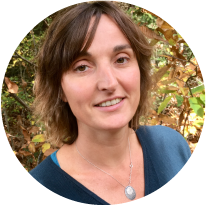 |
Anna COHUET |
|
|
Information |
||
 |
MIVEGEC | |
 |
MoMa (Mosquito X Malaria Interactions) | |
 |
Montpellier | |
 |
0000-0002-1876-5656 | |
 |
This email address is being protected from spambots. You need JavaScript enabled to view it. | |
 |
https://mivegec.fr/ | |
 |
@mivegec | |
|
Scientific interests and projects |
||
|
I have special interest in the ecology of malaria transmission and I have been working on the genetic and environmental determinants of vectorial capacity and competence in malaria vectors, especially focusing on the An. gambiae - P. falciparum system. An ongoing effort in my group is to account for the natural diversity of vector mosquitoes-malaria parasite associations and to perform experiments in conditions that reflect nature as much as possible. I currently develop my field research projects in Burkina Faso on transmission-blocking interventions and on the behavioral effect of infection in interactions with malaria control tools. I lead the MoMa team (Mosquito-Malaria interactions), which is composed of 5 other permanent members and postdocs and students. We believe that malaria transmission is best studied through a variety of means combining the relevance of the field and the power of model systems. Therefore, we have developed platforms in Cameroon and Burkina Faso for experimental infection of mosquito vectors by P. falciparum isolates collected from naturally infected patients. For instance, such facilities allow measuring the efficacy of transmission-blocking interventions. Mosquitoes can also be exposed to specific environmental conditions, including exposition to insecticides for measuring their effect, or the insect can be fed before and after a drug treatment by the patient. In addition, an avian malaria system ( Plasmodium relictum - Culex pipiens ) was developed in Montpellier, which could be especially useful to overcome ethical or technical limitations specific to the inclusion of human patients. Recognising the power of genomics, we are in the midst of adapting our current enquiry methods to the genomics era. We have described the use of single cell transcriptomics directly in parasites from naturally infected carriers, which opens the possibility of studying disease and transmission relevant phenotypes directly in infected patients and bridge the gap between lab and field investigations. We therefore have a rich field and lab experimental scope through which many aspects of malaria biology could be studied within new collaborations. |
||
|
Top 5 publications of the last 5 years |
||
|
1. Carrasco D, Lefèvre T, Moiroux N, Pennetier C, Chandre F, Cohuet A. Behavioural adaptations of mosquito vectors to insecticide control. Curr Opin Insect Sci. 2019 Aug;34:48-54. DOI 10.1016/j.cois.2019.03.005. 2. Mulatier M, Camara S, Koffi A, Carrasco D, Porciani A, Chandre F, Moiroux N, Lefevre T, Dabiré R, Assi S, Ahoua Alou LP, Dormont L, Pennetier C, Cohuet A. Efficacy of vector control tools against malaria-infected mosquitoes. Sci Rep. 2019 Apr 30;9(1):6664. DOI 10.1038/s41598-019-43195-6. 3. Stone WJR, Campo JJ, Ouédraogo AL, Meerstein-Kessel L, Morlais I, Da D, Cohuet A, et al. Unravelling the immune signature of Plasmodium falciparum transmission-reducing immunity. Nature communications 2018 Feb 8;9(1):558.) DOI 10.1038/s41467-017-02646-2 4. Alout H, Roche B, Dabiré RK, Cohuet A. Consequences of insecticide resistance on malaria transmission. PLoS Pathog. 2017 Sep 7;13(9):e1006499. DOI 10.1371/journal.ppat.1006499 5. Churcher TS, Trape JF, Cohuet A: Human-to-mosquito transmission efficiency increases as malaria is controlled. Nature communications 2015, 6:6054. 10.1038/ncomms7054 |
||
PostDoc position in Biological Sciences / Biochemistry: Mode of action of antimalarial benzylmenadiones at IBMC, Strasbourg, France A renewable 1-year postdoctoral...
[Communiqué] L'équipe du Dr Chetan Chitnis de l’Institut Pasteur, partenaire du LabEx ParaFrap, a étudié le stade sanguin du parasite Plasmodium falciparum, à l’origine de la forme la...
The Bioscope Group is organizing the Bioscope Summer Courses in Proteomics in June 2016, in Caparica (Lisbon, Portugal), as follows: June 15th-17th 2016Hands-on course in ultrafast sample...
[Publication] Les derniers travaux de Rania Najm, Hiba El Hajj, Maryse Lebrun & leurs collègues sont publiés dans PNAS. Les auteurs apportent des connaissances importantes sur les acteurs...
PhD Position in Single Particle Imaging of P. falciparum Knobs Project Leader Prof. Dr. Michael Lanzer (Heidelberg University Hospital, Centre for Infectious Diseases,...
The SFP (French Society of Parasitology) - SFMM (the French Society of Medical Mycology) annual meeting 2016 will take place in Grenoble from 23 to 25 March 2016. Information and registration on...
Le LabEx ParaFrap vous souhaite plein de bonheur, de santé, de science et de succès pour 2023. Première actualité du réseau cette année : les webinaires ParaFrap reprennent en 2023, comme les...
The Bioscope Group is organizing the Bioscope Winter Courses in Proteomics in January-February 2016, in Caparica (Lisbon, Portugal), as follows: January 25th-27th 2016 V Hands-on course in...
Actualités du LabEx
Autres actualités
Project Manager: Yoann MILLERIOUX
Contact
 |
@ParaFrap #ParaFrap |
© 2023. All rights reserved MLCOM
Notre site LabEx ParaFrap utilise des cookies pour réaliser des statistiques de visites, partager des contenus sur les réseaux sociaux et améliorer votre expérience. En refusant les cookies, certains services seront amenés à ne pas fonctionner correctement. Nous conservons votre choix pendant 30 jours. Vous pouvez changer d'avis en cliquant sur le bouton 'Cookies' en bas à gauche de chaque page de notre site. En savoir plus
Ce site utilise des cookies pour assurer son bon fonctionnement et ne peuvent pas être désactivés de nos systèmes. Nous ne les utilisons pas à des fins publicitaires. Si ces cookies sont bloqués, certaines parties du site ne pourront pas fonctionner.
Ce site utilise des cookies de mesure et d’analyse d’audience, tels que Google Analytics et Google Ads, afin d’évaluer et d’améliorer notre site internet.
Ce site utilise des composants tiers, tels que NotAllowedScript6a36df1c092a6ReCAPTCHA, Google NotAllowedScript6a36df1c08c50Maps, MailChimp ou Calameo, qui peuvent déposer des cookies sur votre machine. Si vous décider de bloquer un composant, le contenu ne s’affichera pas
Des plug-ins de réseaux sociaux et de vidéos, qui exploitent des cookies, sont présents sur ce site web. Ils permettent d’améliorer la convivialité et la promotion du site grâce à différentes interactions sociales.
Ce site web utilise un certain nombre de cookies pour gérer, par exemple, les sessions utilisateurs.
